General Motors is getting into the electric boat business. In fact, as the American auto giant pushes President Joe Biden’s splashy and ambitious plan to accelerate the rollout of electric cars, GM has also been working somewhat quietly on a quest to build electric planes, trains, and delivery trucks — all powered by its own battery and hydrogen fuel cell technologies.
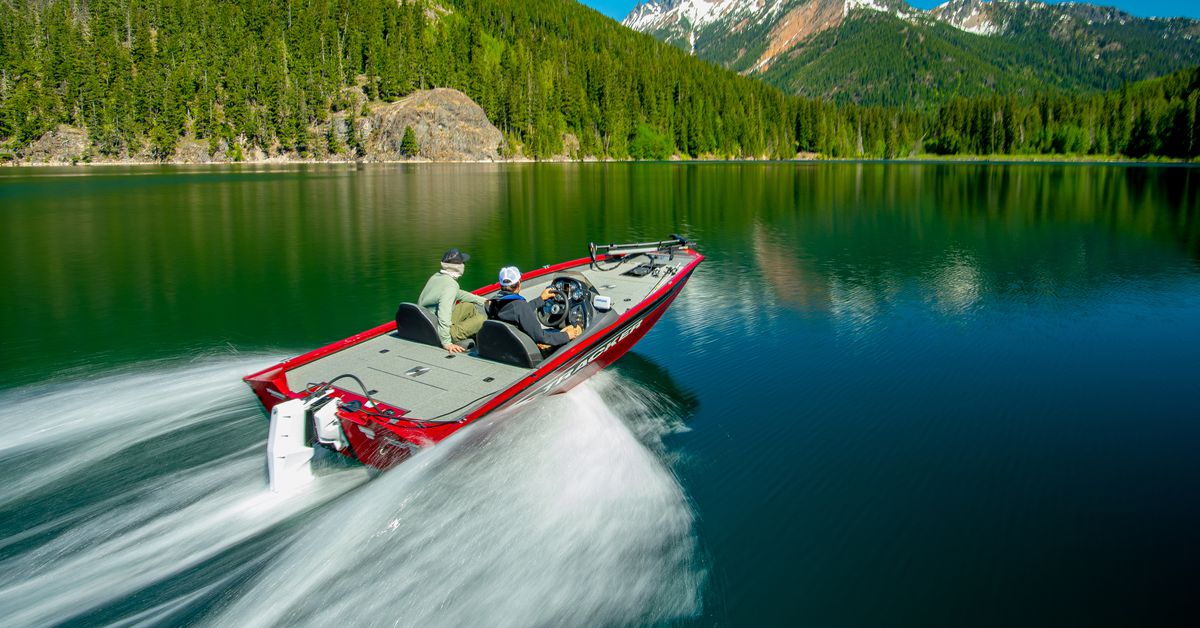
Of the wide range of electric vehicles in the works at GM, you might actually get the chance to drive or ride in one of the new electric boats. The company recently announced that it bought a 25 percent stake in Pure Watercraft, a Seattle-based startup that makes battery-powered outboard motors for boats. As part of the agreement, GM will provide Pure Watercraft with components at the same discounted rate as its internal divisions and help Pure Watercraft build out its manufacturing network. After GM’s investment, which amounts to $150 million in cash and in-kind investment, Pure Watercraft is valued at $600 million.
The companies haven’t shared what specific products they’ll work on together, but the team developing GM’s Forward Marine First, an electric pontoon boat the company first debuted at the Miami International Boat Show in 2019, will join the collaboration.
all-electric future.” That commitment includes investing at least $35 billion to release 30 EV models around the world by 2025 — 20 of those vehicles will be available in the United States. GM went a step further this year and announced it would phase out all of its gas- and diesel-powered vehicles by 2035 and make its operations carbon neutral by 2040. Now the company is racing to build the tools and factories it needs to meet that goal.
Key to GM’s electric dreams is the Ultium lithium-ion cell battery technology, which will be incorporated into a wide range of vehicles. In partnership with LG, the company is spending billions to build two manufacturing plants for the batteries in Ohio and Tennessee, which will be completed in 2022 and 2023, respectively. Even more battery factories could follow in the years to come. GM also entered a strategic supplier agreement with the semiconductor maker Wolfspeed earlier this fall to secure computer chips that are specifically designed for EVs. And just last week, GM hosted President Biden at the grand opening of its newly renovated $2.2 billion electric vehicle assembly plant, Factory Zero. Electric GMC Hummer pickups and Chevy Silverado trucks will be some of the first vehicles manufactured there.
“The reason that electric cars always cost more than the equivalent internal combustion engine vehicle is the battery,” Karl Brauer, an executive analyst at the automotive search engine website, iSeeCars.com, told Recode. “Controlling everything about the batteries — production and cost — is probably the most effective thing a car company could do in a world going toward electric vehicles.”
As the company has doubled down on its EV manufacturing capabilities, it has also designed components so that they can be retrofitted for other forms of transportation. In particular, GM has invested heavily in its Hydrotec hydrogen fuel cell technology, which uses hydrogen and oxygen from the air to produce electricity. (Unlike batteries, which store electricity directly, these fuel cells store hydrogen that is then converted into electricity). The company has already found several customers for this technology, including the truck company Navistar, the aerospace equipment maker Liebherr-Aerospace, and the freight rail manufacturer Wabtec, which is using Hydrotec fuel cells as well as GM’s Ultium batteries.
GM’s path to an all-electric future is not going to be an easy one. GM is essentially competing with every legacy automaker in the world to scoop up its share of the EV market, and there have already been some missteps. Earlier this year, the company recalled all 141,000 of the electric Chevy Bolt electric cars it has produced since 2017 due to a battery-related fire risk. Meanwhile, newer electric vehicle startups are attracting a lot of attention and investment. Electric truck-maker Rivian and luxury electric carmaker Lucid have rivaled or even topped the stock price valuations of Ford, GM, and Stellantis, which owns Chrysler, Dodge, and Jeep. Tesla is also showing no sign of slowing down. The company plans to complete a new Gigafactory, an electric vehicle manufacturing plant, in Texas this year, and it recently became a trillion-dollar company.
Plenty of other companies are carving out their own niche in the electric vehicle industry. Beyond Pure Watercraft, the electric boating sector also includes a startup called Arc, which is building a $300,000 24-foot boat with a top speed of 40 miles per hour. Electric semi-trucks are in the works at several companies, including Chinese auto manufacturers BYD and Geely as well as Tesla. There are also startups developing electric air taxis, some of which will also be autonomous. The Palo Alto-based company Kitty Hawk plans to launch its maiden flight within the next few months with its CEO Sebastian Thrun as its first passenger. Some firms are even developing electric tractors.
But GM may be at an advantage. Biden has frequently voiced support for union-backed car companies, and also credits GM CEO Mary Barra with electrifying “the entire automobile industry.” The White House also doesn’t have the best relationship with Tesla, which does not have a union and was not invited to the August White House summit on electrical vehicles. At the same time, Biden’s Build Back Better spending package would, among other goals, provide extra tax credits on electric vehicles built in the US and made by union companies — which is exactly what GM is trying to do.
And then there’s the fact that GM is a century-old automaker that’s manufactured more than half a billion vehicles over its corporate lifetime. That experience could be critical as GM races to integrate not just its cars, but many different modes of transportation, into its electric future.
This story first published in the Recode newsletter. Sign up here so you don’t miss the next one!