If a competitor is mentioned more often, cited more frequently, or framed more favorably in AI answers, they win attention and trust before searchers even know you exist.
This guide shows you how to run an AI search competitor analysis that reveals:
- Which brands in your industry dominate AI search today
- Where your competitors earn visibility, but you don’t
- Which topics, pages, and sources drive their advantage
- What to prioritize to close the gap fast
It’s a step-by-step process you can repeat quarterly, or whenever a new competitor, model update, or internal priority change (such as when you launch a new product) hits your radar.
Want to turn this analysis into a report for stakeholders?
Download the AI Search Competitor Analysis Report Template, a ready-made framework to document visibility gaps, ranking strength, and where your competitors are winning in AI search.
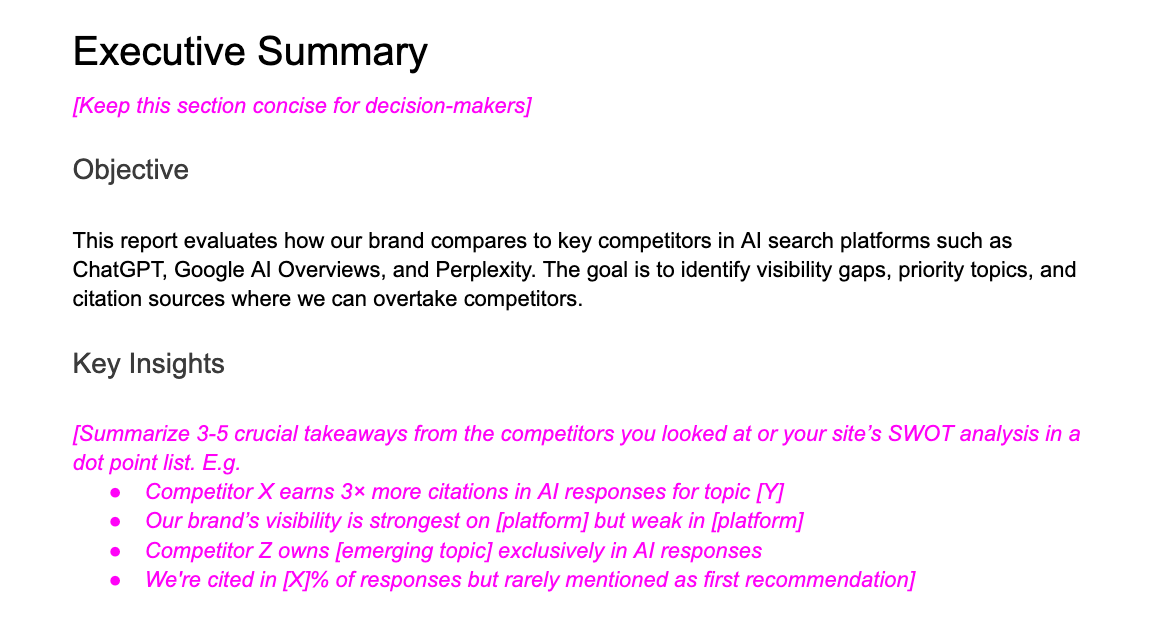
It includes:
- A competitor SWOT analysis for AI visibility
- A topic gap matrix to show who owns which themes
- An action plan section with priority ratings for stakeholders
Use the step-by-step process in this guide to fill it in with real insights and turn raw data into a clear plan your team can act on.
Brand Radar. For instance, if you enter your brand, you can use the AI suggest feature to list other similar brands to yours:

These will typically be competitors you’re aware of and that you compete with for brand mentions in AI responses.
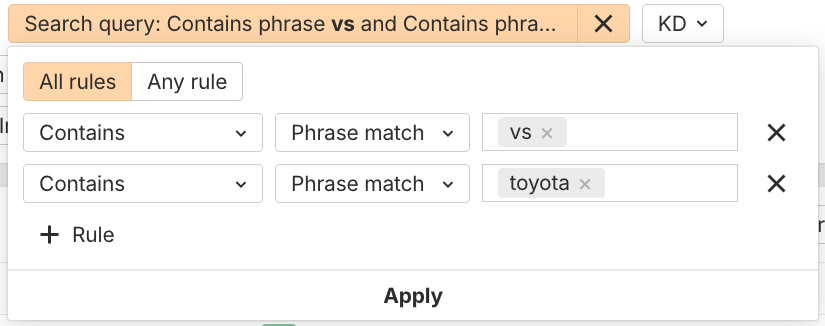
If you check out the Search queries report, you’ll be able to find the competitors that your audience frequently compares you to. You can filter the data by looking for queries that contain your brand and words with comparative intent, like “vs”:
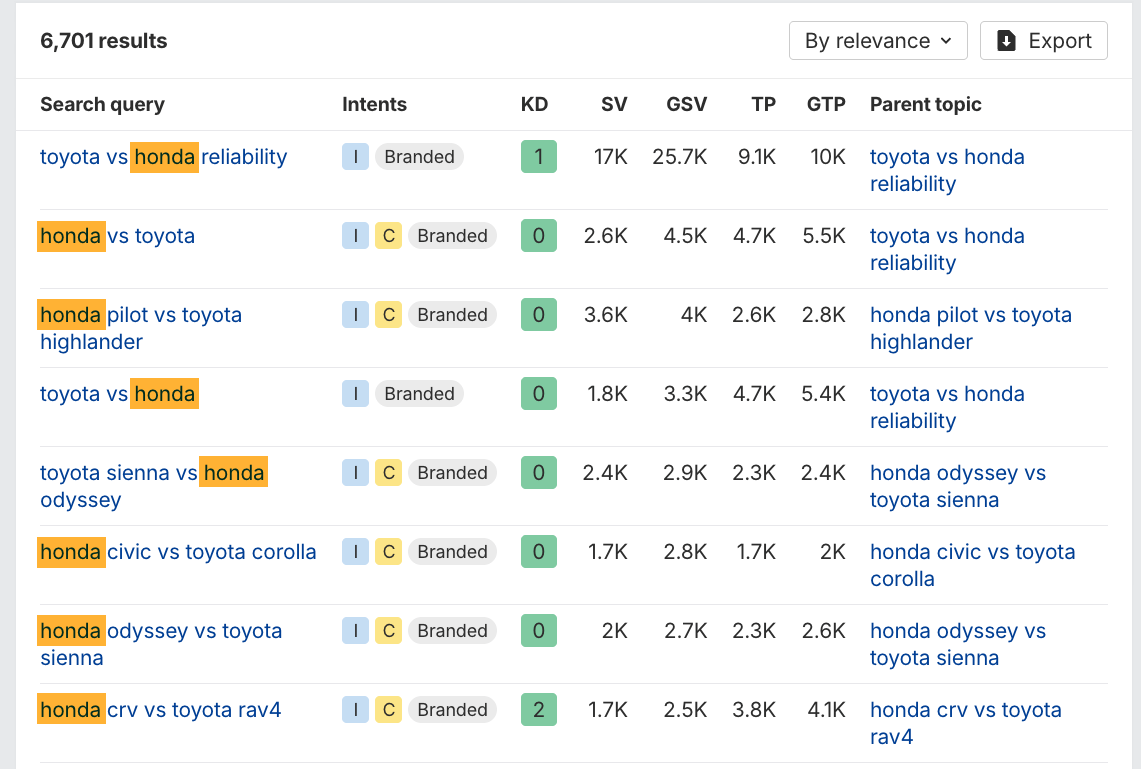
For example, Honda is a strong competitor of Toyota’s that searchers frequently compare:
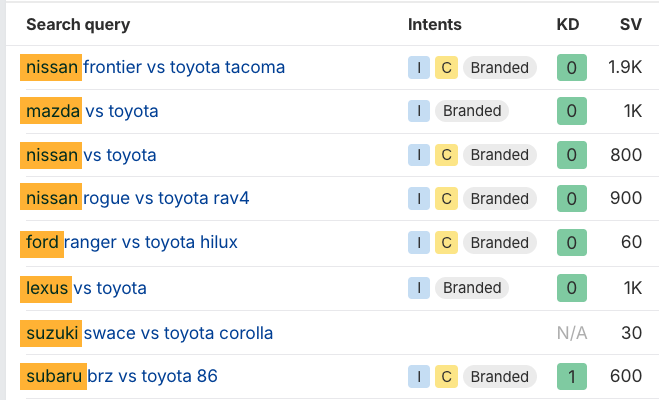
Other brands that are commonly compared to Toyota include Nissan, Mazda, Ford, Lexus, Suzuki, and Subaru:
To find competitors that are cited as sources, check out the Cited domains report.
More often than not, you’ll see general sites like Wikipedia, Reddit, or social media in the top spots. These sites are too large and authoritative to compare against in most cases.
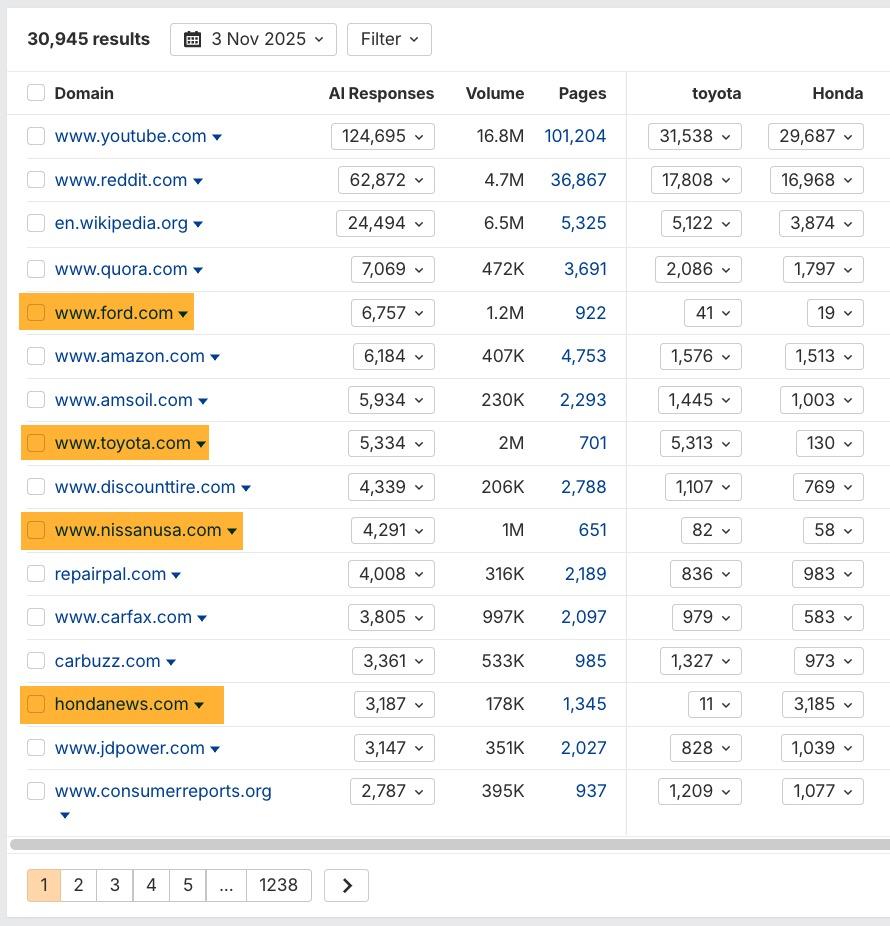
But you’ll also spot other sites in your industry that get cited more than your brand. Sometimes they’ll be industry publications. Other times, they’ll be direct competitors, like Ford, Nissan, and Honda, in the example below:
Select the ones that make the most sense for your analysis or that your stakeholders care about the most.
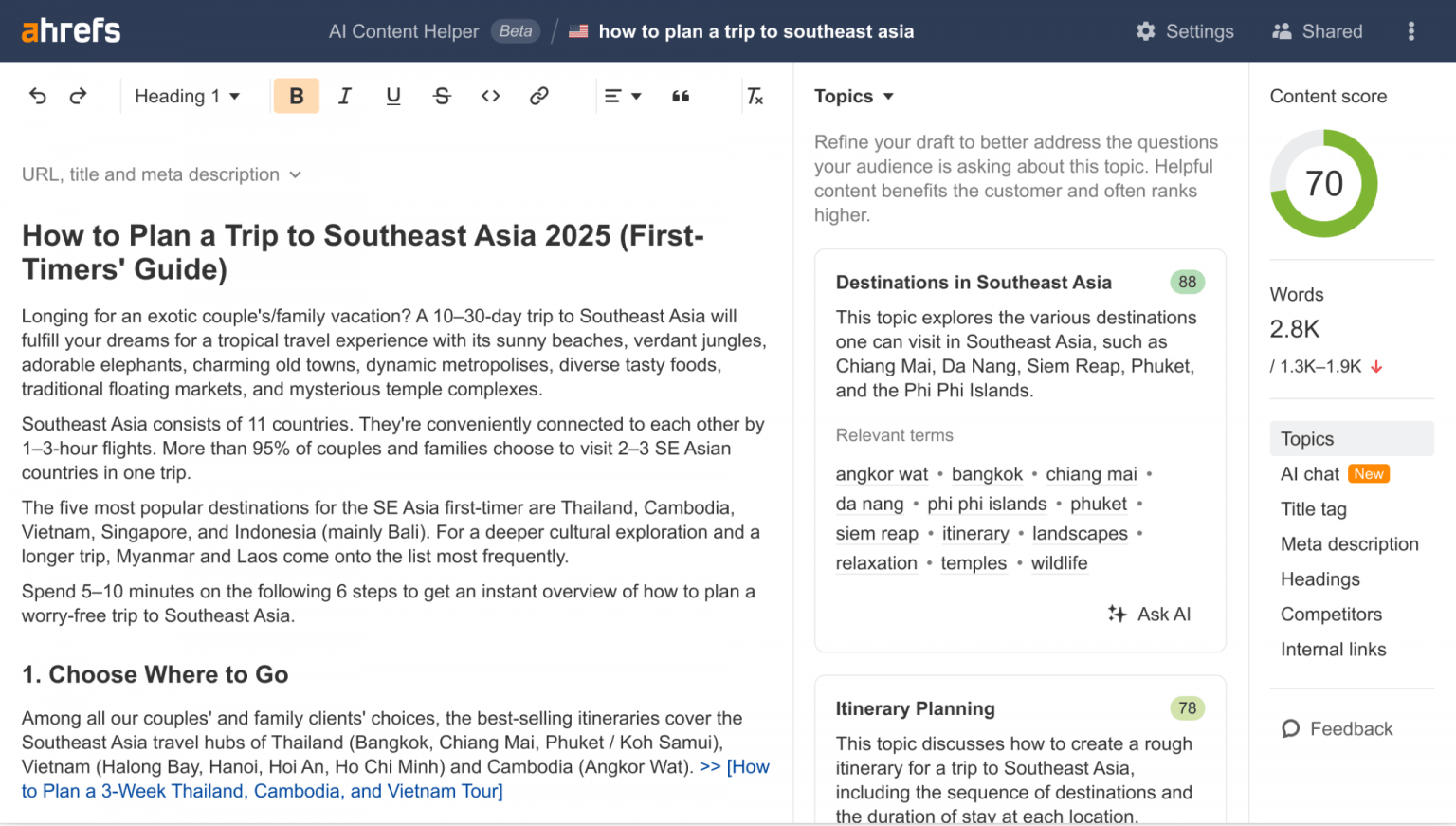
AI Content Helper can help with this. It analyzes your content as you type, allowing you to cover essential gaps.
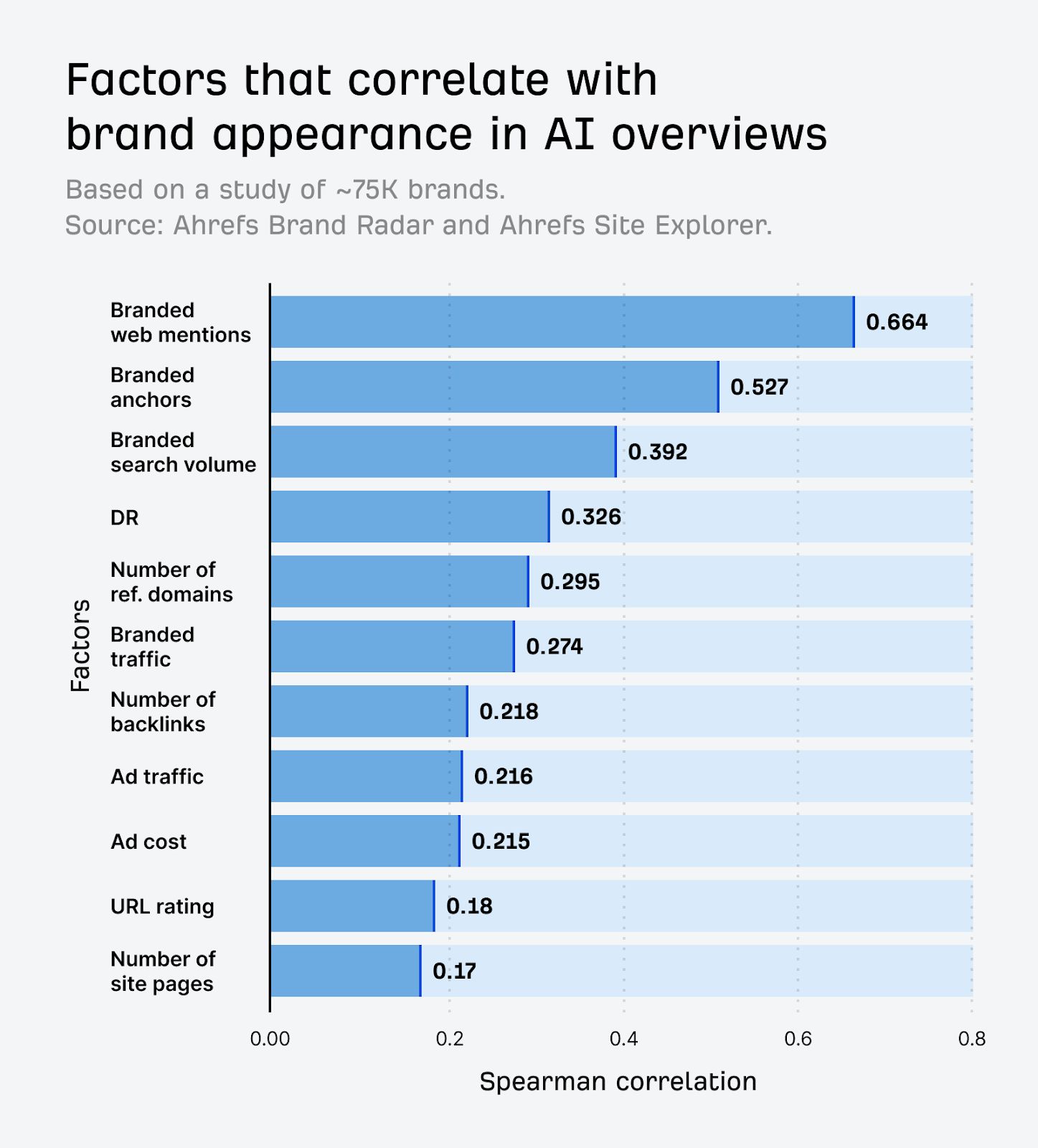
strong factor that influences visibility in AI responses.
More often than not, AI will cite someone else’s content (even for queries about your brand) than yours.
So, it’s worth checking which sources influence information about your brand and competitors. In Brand Radar, you can check out the Web pages report to find all mentions of any brand online.
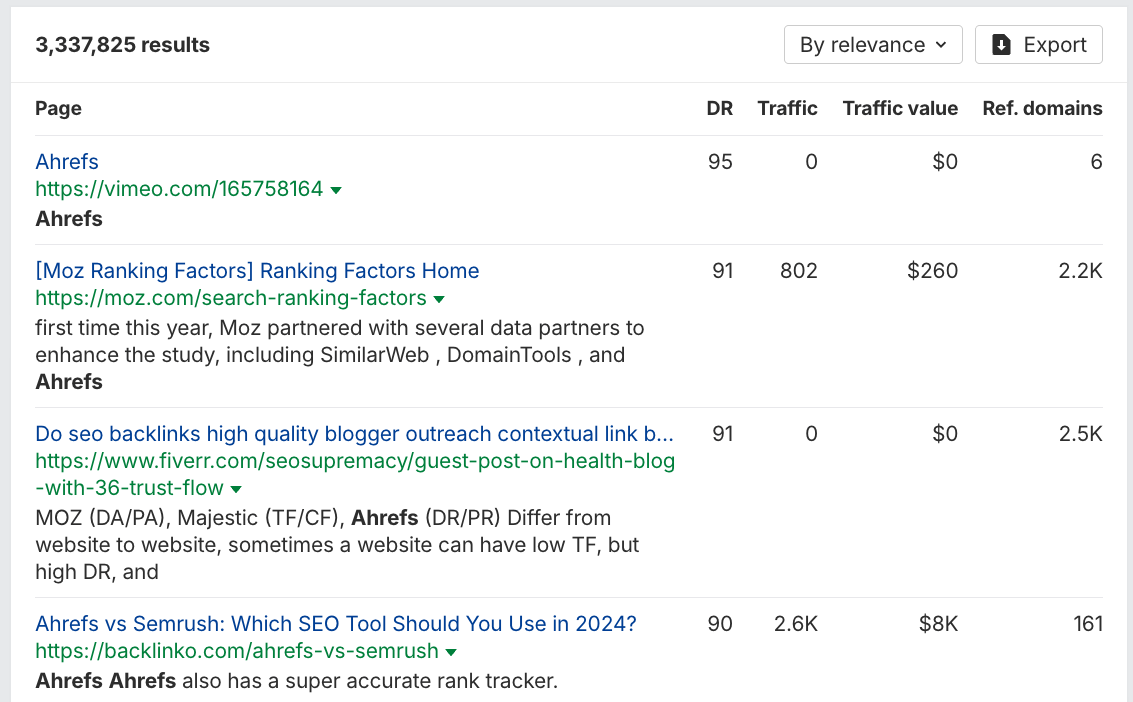
To find gaps in web mentions, I like to search each competitor individually in the main search bar.

Then I use the filters in the Web pages report to remove mentions on their own websites and then export the results.
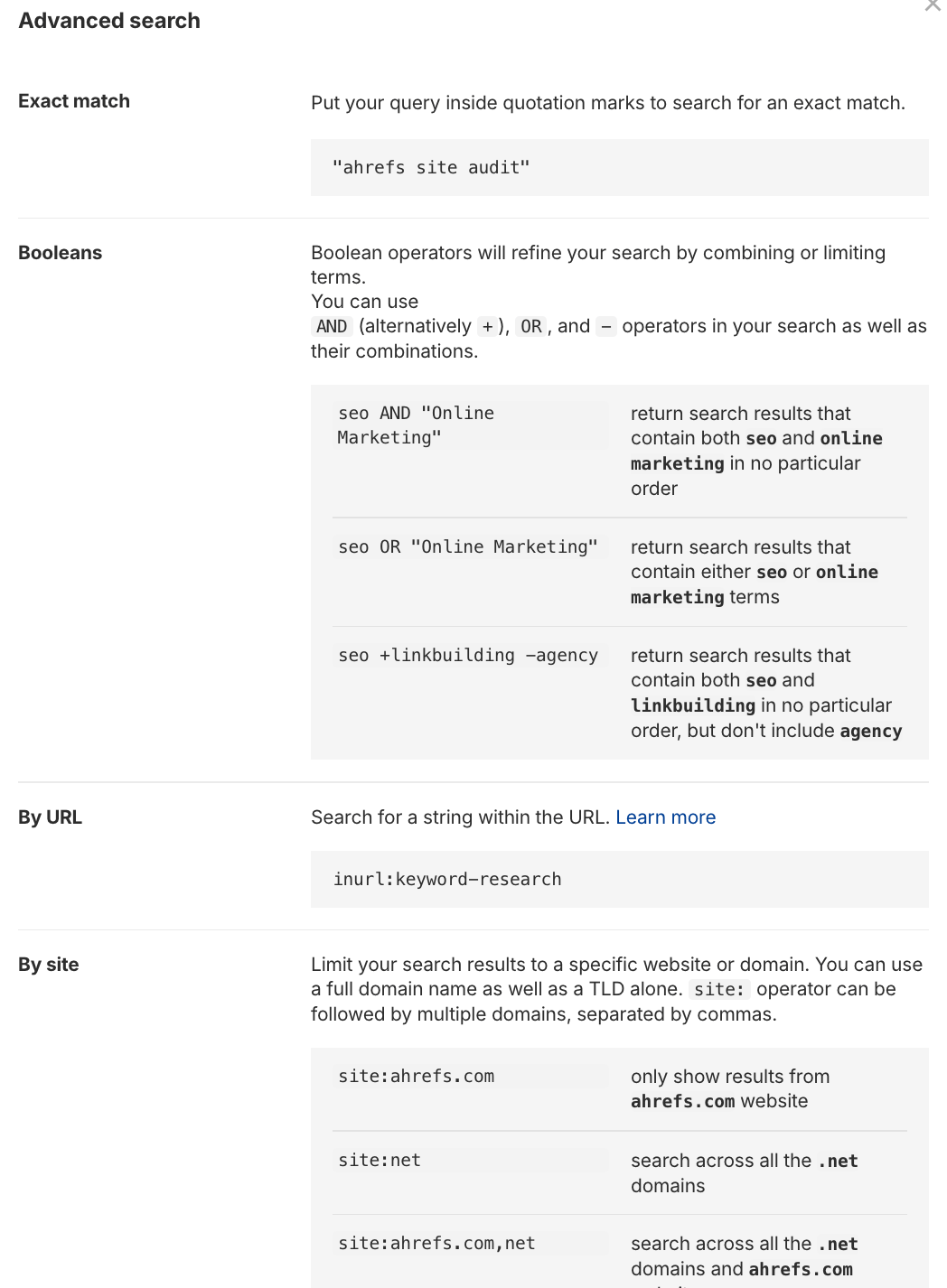
For instance, you can use “-site:yourcompetitor.com” to remove a competitor’s brand mentions on their own website.
Once you’ve removed irrelevant results, export the list so you can compare it against your brand and other competitors in a spreadsheet. Try out this simple template. Add your exported data to columns B–H, ensuring they are aligned correctly. Then manually fill in the brand in column A.
Keep adding each brand’s export to the bottom of the list.
Once you’ve added data for a few brands, here’s what the comparison view will look like:
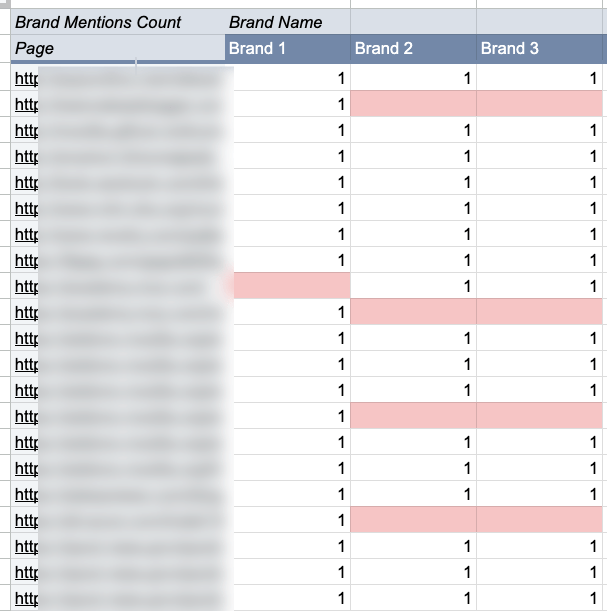
The empty cells point to missed opportunities. Start by scanning for posts or responses that highlight several competitors but leave your brand out; these are likely your fastest wins.
Next, analyze how your competitors earned their most impactful mentions:
- Content types: Are their mentions embedded in blog posts, research reports, or case studies? These formats might be worth replicating or targeting in your outreach efforts.
- Publications and sources: Are the same authors or websites referencing them consistently? If so, they may be trusted voices in your space and suitable candidates for outreach or collaboration.
- Campaign triggers: Was the mention associated with a product release, viral post, or a unique framework? Identify what sparked the attention to guide your own strategic moves.
- Distribution tactics: Guest articles, joint content, or partner campaigns might be amplifying their presence.
Reverse engineering what’s working for your competitors helps you close visibility gaps, understand which tactics actually move the needle in your category, and how to make them work for your brand.
AI Search Competitor Analysis Report template if you don’t already have one.
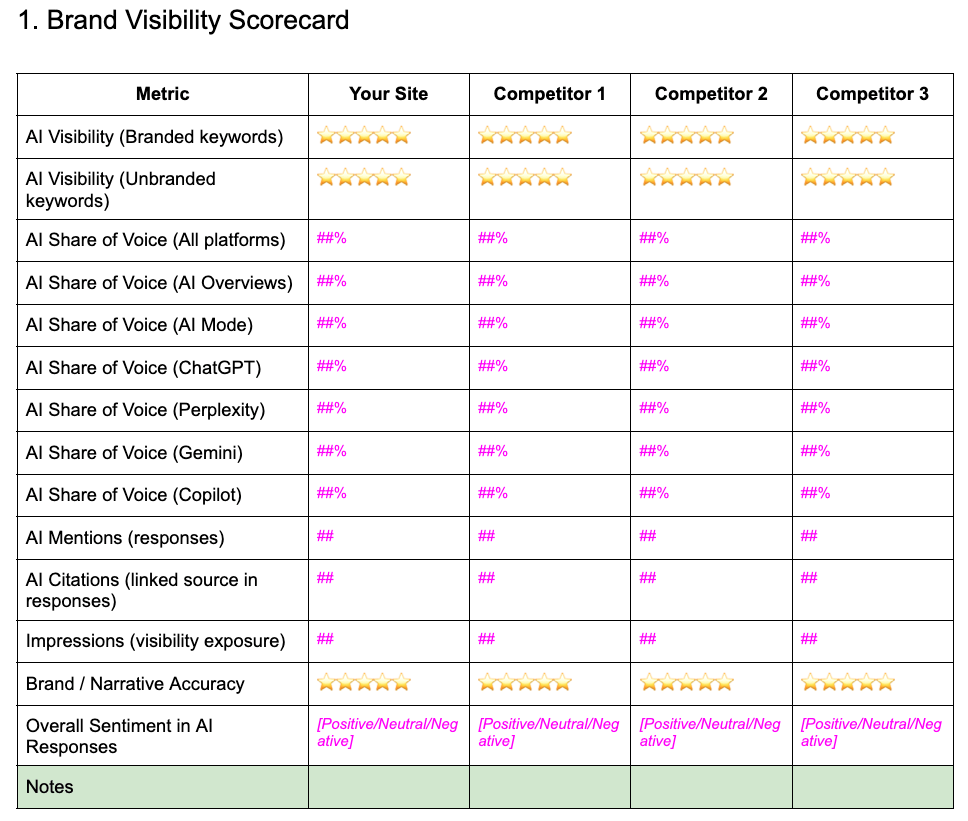
Replace all the pink sections and summarize your key findings in scorecards and quick snapshots of key points.
Also, it’s worth making competitor tracking a recurring workflow.
Run the same analysis monthly or quarterly to measure how share of voice and brand framing evolve across AI models and markets.
AI search changes fast, and regular benchmarking turns your one-off study into an ongoing strategic advantage.
Final thoughts
An AI search competitor analysis goes beyond measuring who’s winning visibility by explaining why they’re winning.
By combining quantitative data (mentions, citations, impressions, share of voice) with qualitative context (framing, sentiment, credibility), you can pinpoint the levers that influence AI perception for your brand compared with competitors.
Over time, these insights help you refine positioning, content strategy, and digital PR, not just for Google, but for every AI system interpreting your brand.
Further reading
These will typically be competitors you’re aware of and that you compete with for brand mentions in AI responses.
If you check out the Search queries report, you’ll be able to find the competitors that your audience frequently compares you to. You can filter the data by looking for queries that contain your brand and words with comparative intent, like “vs”:
For example, Honda is a strong competitor of Toyota’s that searchers frequently compare:
Other brands that are commonly compared to Toyota include Nissan, Mazda, Ford, Lexus, Suzuki, and Subaru:
To find competitors that are cited as sources, check out the Cited domains report.
More often than not, you’ll see general sites like Wikipedia, Reddit, or social media in the top spots. These sites are too large and authoritative to compare against in most cases.
But you’ll also spot other sites in your industry that get cited more than your brand. Sometimes they’ll be industry publications. Other times, they’ll be direct competitors, like Ford, Nissan, and Honda, in the example below:
Select the ones that make the most sense for your analysis or that your stakeholders care about the most.
AI Content Helper can help with this. It analyzes your content as you type, allowing you to cover essential gaps.
strong factor that influences visibility in AI responses.
More often than not, AI will cite someone else’s content (even for queries about your brand) than yours.
So, it’s worth checking which sources influence information about your brand and competitors. In Brand Radar, you can check out the Web pages report to find all mentions of any brand online.
To find gaps in web mentions, I like to search each competitor individually in the main search bar.
Then I use the filters in the Web pages report to remove mentions on their own websites and then export the results.
For instance, you can use “-site:yourcompetitor.com” to remove a competitor’s brand mentions on their own website.
Once you’ve removed irrelevant results, export the list so you can compare it against your brand and other competitors in a spreadsheet. Try out this simple template. Add your exported data to columns B–H, ensuring they are aligned correctly. Then manually fill in the brand in column A.
Keep adding each brand’s export to the bottom of the list.
Once you’ve added data for a few brands, here’s what the comparison view will look like:
The empty cells point to missed opportunities. Start by scanning for posts or responses that highlight several competitors but leave your brand out; these are likely your fastest wins.
Next, analyze how your competitors earned their most impactful mentions:
- Content types: Are their mentions embedded in blog posts, research reports, or case studies? These formats might be worth replicating or targeting in your outreach efforts.
- Publications and sources: Are the same authors or websites referencing them consistently? If so, they may be trusted voices in your space and suitable candidates for outreach or collaboration.
- Campaign triggers: Was the mention associated with a product release, viral post, or a unique framework? Identify what sparked the attention to guide your own strategic moves.
- Distribution tactics: Guest articles, joint content, or partner campaigns might be amplifying their presence.
Reverse engineering what’s working for your competitors helps you close visibility gaps, understand which tactics actually move the needle in your category, and how to make them work for your brand.
AI Search Competitor Analysis Report template if you don’t already have one.
Replace all the pink sections and summarize your key findings in scorecards and quick snapshots of key points.
Also, it’s worth making competitor tracking a recurring workflow.
Run the same analysis monthly or quarterly to measure how share of voice and brand framing evolve across AI models and markets.
AI search changes fast, and regular benchmarking turns your one-off study into an ongoing strategic advantage.
Final thoughts
An AI search competitor analysis goes beyond measuring who’s winning visibility by explaining why they’re winning.
By combining quantitative data (mentions, citations, impressions, share of voice) with qualitative context (framing, sentiment, credibility), you can pinpoint the levers that influence AI perception for your brand compared with competitors.
Over time, these insights help you refine positioning, content strategy, and digital PR, not just for Google, but for every AI system interpreting your brand.
Further reading
strong factor that influences visibility in AI responses.
More often than not, AI will cite someone else’s content (even for queries about your brand) than yours.
So, it’s worth checking which sources influence information about your brand and competitors. In Brand Radar, you can check out the Web pages report to find all mentions of any brand online.
To find gaps in web mentions, I like to search each competitor individually in the main search bar.
Then I use the filters in the Web pages report to remove mentions on their own websites and then export the results.
For instance, you can use “-site:yourcompetitor.com” to remove a competitor’s brand mentions on their own website.
Once you’ve removed irrelevant results, export the list so you can compare it against your brand and other competitors in a spreadsheet. Try out this simple template. Add your exported data to columns B–H, ensuring they are aligned correctly. Then manually fill in the brand in column A.
Keep adding each brand’s export to the bottom of the list.
Once you’ve added data for a few brands, here’s what the comparison view will look like:
The empty cells point to missed opportunities. Start by scanning for posts or responses that highlight several competitors but leave your brand out; these are likely your fastest wins.
Next, analyze how your competitors earned their most impactful mentions:
- Content types: Are their mentions embedded in blog posts, research reports, or case studies? These formats might be worth replicating or targeting in your outreach efforts.
- Publications and sources: Are the same authors or websites referencing them consistently? If so, they may be trusted voices in your space and suitable candidates for outreach or collaboration.
- Campaign triggers: Was the mention associated with a product release, viral post, or a unique framework? Identify what sparked the attention to guide your own strategic moves.
- Distribution tactics: Guest articles, joint content, or partner campaigns might be amplifying their presence.
Reverse engineering what’s working for your competitors helps you close visibility gaps, understand which tactics actually move the needle in your category, and how to make them work for your brand.
AI Search Competitor Analysis Report template if you don’t already have one.
Replace all the pink sections and summarize your key findings in scorecards and quick snapshots of key points.
Also, it’s worth making competitor tracking a recurring workflow.
Run the same analysis monthly or quarterly to measure how share of voice and brand framing evolve across AI models and markets.
AI search changes fast, and regular benchmarking turns your one-off study into an ongoing strategic advantage.
Final thoughts
An AI search competitor analysis goes beyond measuring who’s winning visibility by explaining why they’re winning.
By combining quantitative data (mentions, citations, impressions, share of voice) with qualitative context (framing, sentiment, credibility), you can pinpoint the levers that influence AI perception for your brand compared with competitors.
Over time, these insights help you refine positioning, content strategy, and digital PR, not just for Google, but for every AI system interpreting your brand.
Further reading
More often than not, AI will cite someone else’s content (even for queries about your brand) than yours.
So, it’s worth checking which sources influence information about your brand and competitors. In Brand Radar, you can check out the Web pages report to find all mentions of any brand online.
To find gaps in web mentions, I like to search each competitor individually in the main search bar.
Then I use the filters in the Web pages report to remove mentions on their own websites and then export the results.
For instance, you can use “-site:yourcompetitor.com” to remove a competitor’s brand mentions on their own website.
Once you’ve removed irrelevant results, export the list so you can compare it against your brand and other competitors in a spreadsheet. Try out this simple template. Add your exported data to columns B–H, ensuring they are aligned correctly. Then manually fill in the brand in column A.
Keep adding each brand’s export to the bottom of the list.
Once you’ve added data for a few brands, here’s what the comparison view will look like:
The empty cells point to missed opportunities. Start by scanning for posts or responses that highlight several competitors but leave your brand out; these are likely your fastest wins.
Next, analyze how your competitors earned their most impactful mentions:
- Content types: Are their mentions embedded in blog posts, research reports, or case studies? These formats might be worth replicating or targeting in your outreach efforts.
- Publications and sources: Are the same authors or websites referencing them consistently? If so, they may be trusted voices in your space and suitable candidates for outreach or collaboration.
- Campaign triggers: Was the mention associated with a product release, viral post, or a unique framework? Identify what sparked the attention to guide your own strategic moves.
- Distribution tactics: Guest articles, joint content, or partner campaigns might be amplifying their presence.
Reverse engineering what’s working for your competitors helps you close visibility gaps, understand which tactics actually move the needle in your category, and how to make them work for your brand.
AI Search Competitor Analysis Report template if you don’t already have one.
Replace all the pink sections and summarize your key findings in scorecards and quick snapshots of key points.
Also, it’s worth making competitor tracking a recurring workflow.
Run the same analysis monthly or quarterly to measure how share of voice and brand framing evolve across AI models and markets.
AI search changes fast, and regular benchmarking turns your one-off study into an ongoing strategic advantage.
Final thoughts
An AI search competitor analysis goes beyond measuring who’s winning visibility by explaining why they’re winning.
By combining quantitative data (mentions, citations, impressions, share of voice) with qualitative context (framing, sentiment, credibility), you can pinpoint the levers that influence AI perception for your brand compared with competitors.
Over time, these insights help you refine positioning, content strategy, and digital PR, not just for Google, but for every AI system interpreting your brand.
Further reading
Replace all the pink sections and summarize your key findings in scorecards and quick snapshots of key points.
Also, it’s worth making competitor tracking a recurring workflow.
Run the same analysis monthly or quarterly to measure how share of voice and brand framing evolve across AI models and markets.
AI search changes fast, and regular benchmarking turns your one-off study into an ongoing strategic advantage.
Final thoughts
An AI search competitor analysis goes beyond measuring who’s winning visibility by explaining why they’re winning.
By combining quantitative data (mentions, citations, impressions, share of voice) with qualitative context (framing, sentiment, credibility), you can pinpoint the levers that influence AI perception for your brand compared with competitors.
Over time, these insights help you refine positioning, content strategy, and digital PR, not just for Google, but for every AI system interpreting your brand.
Further reading