I love it when there’s a sense of synergy in the blogosphere. First, I caught Nick Heer’s coverage of Meta ending support for Instant Articles, its proprietary format for stripped-down performant news articles. He also compares it to the similar demise of AMP, Google’s answer to Instant Articles.
Then I came across a new one from Chris Coyier where he goes on to discuss the big issue with proprietary models of content syndication, whether it’s Meta Instant Articles, Google AMP, or even Apple News:
[T]hat’s the job as a publisher: get your content out to as many people as possible. If syndicating into another format is where people are, it’s likely worth doing.
[…]If you were a publisher and followed that welp, that’s just our job mentality to provide content wherever people are (which is awfully tempting), now you’re in 4-5 formats already, none of which are terribly “automatic”. And that’s not counting, ya know, video, audio, social media, and all the other stuff that has become content producers’ jobs.
If only we had some standard to solve content syndication in a sparse, performant way that doesn’t require the overhead of corporate-driven proprietary formats. Oh wait, we’ve had one forever:
Literally none of the big players I mentioned above were like just give us your RSS feed, which, looking back, is a little bananas. RSS solves many of the same problems they were trying to solve […].
Then there’s what Jim Nielsen shared about his work to create a reading experience on his personal blog that emphasizes a user’s preference the “fidelity” of content:
In other words, rather than going to
text.npr.orgwhen you want a lean experience, you always go tonpr.orgbut you set your “fidelity preference” to “low”. In theory, this sends a header to NPR indicating you want a “low fidelity” version of the website, e.g. text-only.
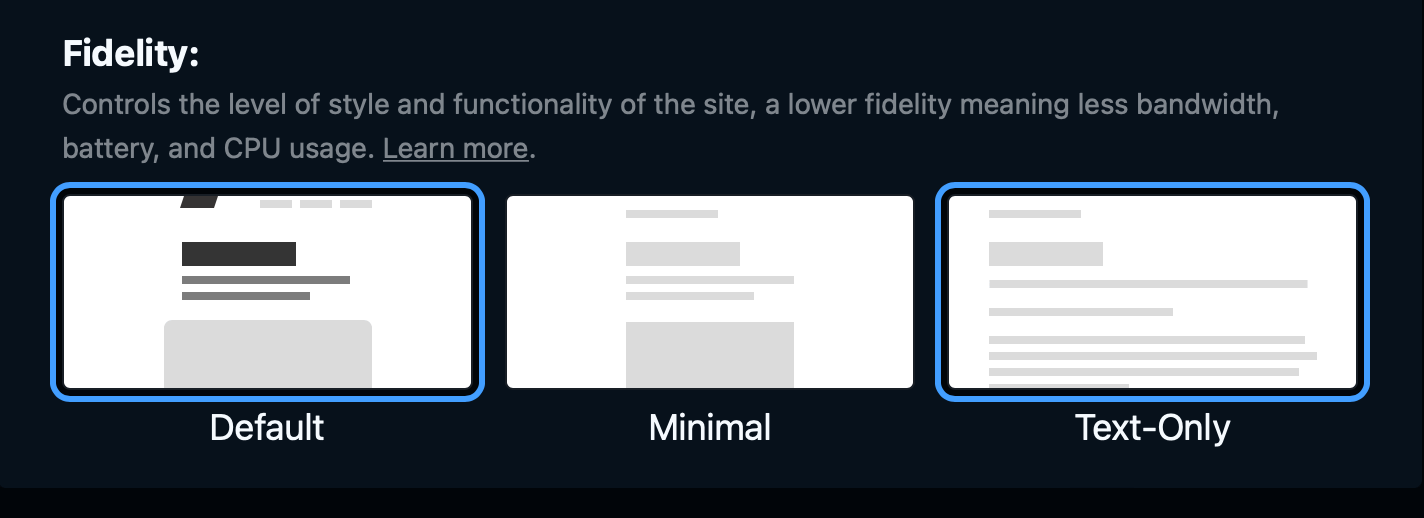
Oh my gosh, this a million times! How cool is it for a content-drive site (waves at CSS-Tricks) to not only give users the ability to decide how “rich” of an experience they want, but to do so in a way that leverages the power of HTML to make it happen. Jim’s implementation chugs out different versions of the same article on build:
.
├── index.html # default
├── _fidelity/ ├── low/ │ └── index.html # text-only └── med/ └── index.html # minimal
Redirects can take care of things once the user makes a choice. Jim has ideas for how to improve the build process so that he doesn’t need to generate JSDOM documents for each article while performing extra work to strip stuff out. But this is a great idea and start!
Three articles within three days that all converge around the same idea, but with different angles, ideas, and solutions. Blogging is cool. (And so is RSS!)